Blue Hole Excursions From Ambergris Caye
Blue Hole Excursions From Ambergris Caye

Blue hole excursions from Ambergris Caye is one of the most popular dive excursiond from Ambergris Caye and San Pedro Belize. The youngest allowed to paticipate in Blue hole excursions from Ambergris Caye is 13 years old. Blue hole excursions from Ambergris Caye is a 4.5 hours tour offered my most tour companies in Ambergris Caye and San Pedro Belize. Blue hole excursions from Ambergris Caye is a family friendly adventure that can be done by most age groups.
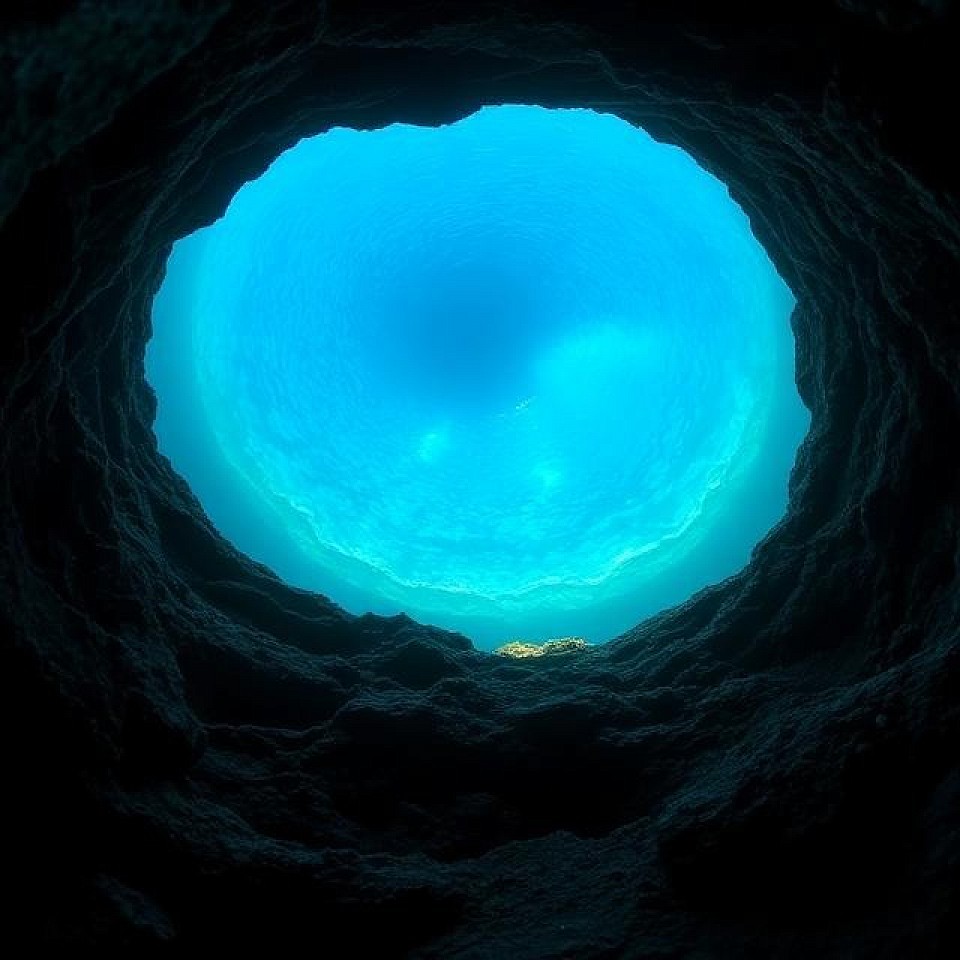
The Great Blue Hole is a large marine sinkhole off the coast of Belize. It lies near the center of Lighthouse Reef, a small atoll 70 km from the mainland and Belize City. The hole is circular in shape, 318 m across and 124 m deep. It has a surface area of 70,650 square metres. It was formed during several phases of the Quaternary glaciation when sea levels were much lower. Analysis of stalactites found in the Great Blue Hole shows that formation took place 153,000, 66,000, 60,000, and 15,000 years ago. As the ocean began to rise again, the cave was flooded. The Great Blue Hole is part of the larger Belize Barrier Reef Reserve System, a UNESCO World Heritage Site.
The site was made famous by Jacques Cousteau, who declared it one of the top five scuba diving sites in the world. In 1971 he brought his ship, the Calypso, to the hole to chart its depths. Investigations by this expedition confirmed the hole's origin as typical karst limestone formations, formed before rises in sea level in at least four stages, leaving ledges at depths of 21 m, 49 m, and 91 m. Stalactites were retrieved from submerged caves, confirming their previous formation above sea level. Some of these stalactites were also off-vertical by 5˚ in a consistent orientation, indicating that there had also been some past geological shift and tilting of the underlying plateau, followed by a long period in the current plane. The tilt indicates that this was movement of the land, rather than a rise in sea level alone. The initial measured depth of the Great Blue Hole was about 125 m which is the most often cited depth up to this day.
An expedition was conducted in the summer of 1997 to collect core samples from the Blue Hole's floor and document the cave system. To accomplish these tasks, all of the divers had to be certified in cave diving and mixed gases.

Ambergris Caye Belize
Ambergris Caye Belize is the largest island of Belize, located northeast of the country's mainland, in the Caribbean Sea. It is about 40 kilometres (25 mi) long from north to south, and about 1.6 kilometres (1 mi) wide. Many parts of the island have been modified by human development since the arrival of coconut plantations in the 17th century, but it remains largely white coral sand with mangrove forest at its centre. Its eastern coast runs parallel to the northernmost stretch of the Belize Barrier Reef, a UNESCO World Heritage Site.
A Maya community lived on the island in Pre-Columbian times, leaving behind distinctive polished red ceramics. It is widely believed that maritime trade motivated the Mayans themselves to excavate "Boca Bacalar Chico", the marine channel that separates the island from the Mexican mainland, but its origins could also have been natural.
San Pedro Town is the largest settlement and only town on Ambergris Caye. There are also a number of small villages and resorts that serve the island's growing tourism industry, especially ecotourism and scuba diving. Although administered as part of the Belize District, the closest point on the mainland is part of the Corozal District.